A new roof in Eastbourne typically costs £5,500–£9,500 for a concrete-tile 3-bed semi, £7,500–£12,000 in clay, and £8,000–£16,000+ for period properties in matched natural materials. Prices include scaffold, strip, membrane, battens, Code 5 lead and VAT, with a 10-year workmanship guarantee. Free surveys — call 01323 365960.
Do You Actually Need Roof Replacement?
A full re-roof is a big spend, so the first question is whether you actually need one. Here is how to tell an end-of-life roof from one that just needs repair.
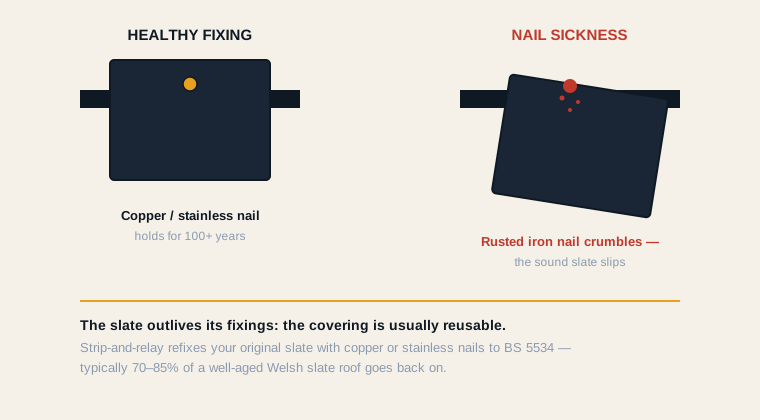
- Tiles slipping across several slopes at once, not just one spot (classic nail sickness)
- Repeated repairs in a short space of time — you are renting time on a failing roof
- Sagging roofline, or bowing felt and battens visible in the loft
- Widespread slate delamination or crumbling concrete tiles
- Damp getting in despite recent repairs
When it is not the answer: If the damage is localised and the covering has years of life left, a targeted repair is the right call and a full re-roof would be oversell — we will tell you so. Read the full guide.
Eastbourne Stock & Local Factors
When an Eastbourne roof reaches the end of its life, the right replacement tracks the housing era. The concrete-tile estates of Langney and Shinewater are the classic re-roof candidates once nail sickness has spread across the slopes — the tiles are often sound, but the whole roof is slipping, and a strip-and-re-cover or full replacement ends years of patch repairs. On Meads and Old Town period stock, replacement usually means natural slate or clay to match the conservation-area character, with lime mortar and traditional detailing rather than the cheapest modern interlocking tile.
Coastal exposure shapes every Eastbourne re-roof. We fit breathable membrane, correct the ventilation that older roofs often lack, and use marine-grade lead and stainless fixings throughout, because the salt air that shortened the old roof's life will test the new one just as hard. On exposed western and seafront elevations we also pay particular attention to verge and ridge fixing — dry-verge systems and mechanically-fixed ridges resist the south-westerly wind far better than the old mortar-bedded details they replace.
What to Expect: Roof Replacement in Eastbourne
1. Survey & measure
We assess the covering, battens, felt and structure, confirm whether it is genuinely end-of-life, and measure for materials.
2. Specification & written quote
You get an itemised specification — covering, breathable membrane, battens, lead code, ventilation and scaffold — as a fixed written price.
3. Scaffold & scheduling
Full scaffold goes up with the licence arranged; we agree a start date and a realistic weather-aware duration.
4. Strip & dry-in
We strip the old covering, replace defective battens, fit breathable membrane and make the roof watertight each evening.
5. Re-cover & detail
New covering, ridge, verge, valleys and leadwork to BS 5534, with ventilation corrected.
6. Cleanup, sign-off & guarantee
Full clear-up and waste removal, walk-round, and handover of your written 10-year guarantee.
How Long Does It Take?
| Job | Typical duration |
|---|---|
| Garage / outbuilding re-roof | 1–2 days |
| Terraced house re-roof | 3–5 days |
| 3-bed semi re-roof | 5–8 days |
| Large detached / complex roof | 8–12 days |
Re-roofs are weather-dependent; we dry-in each evening so the house is never left open, and build spare days into the programme for Eastbourne's coastal weather.
Getting Safely onto Eastbourne Roofs
A re-roof always needs full scaffold; we arrange the licence and it is itemised in your quote, never a hidden extra. Scaffold is specified for: the whole roof — full independent scaffold is standard on every re-roof - always itemised in your written quote, never a hidden extra, and we arrange it.
Eastbourne's Victorian and Edwardian terraces in Meads, Upperton and Old Town often have no side access, so scaffold reaches the rear over the roofline or through the property; seafront mansion blocks need tall scaffold licences for parapet and stack work. Pavement scaffold and skip permits go through East Sussex County Council; allow a few working days on streets like Church Street in Old Town, the terraces off Seaside, Grange Road in Upperton where space is tight.
Roof Replacement Prices in Eastbourne
| Job | Typical range | Notes |
|---|---|---|
| Garage / outbuilding | £1,800–£3,500 | Size and covering |
| Terraced house re-roof | £5,000–£8,500 | Incl. scaffold |
| 3-bed semi re-roof | £7,500–£12,000 | Concrete or clay tile |
| Natural slate re-roof | £12,000–£18,000+ | Meads/Old Town period stock |
| Detached / complex | £12,000–£20,000+ | Multiple slopes, dormers |
What moves the price
- Roof size, pitch and number of slopes, dormers and valleys
- Covering — concrete interlocking vs clay vs natural slate (conservation matching in Meads)
- Scaffold scale, especially tall seafront and no-access terraced sites
- Whether battens, membrane and structural timber need replacing
- Marine-grade lead and stainless fixings as standard on the coast
Worked example: A concrete-tile re-roof on a 1970s 3-bed semi in Langney, including full scaffold, breathable membrane and dry-verge: about £9,200.
Staged payments across the job — a fair schedule agreed up front, with nothing paid before materials and scaffold are on site.
Covering BN20, BN21, BN22, BN23, BN24 and surrounding postcodes.
Your Guarantee, Explained
The complete re-roof carries a 10-year workmanship guarantee in writing, transferable if you sell; tiles, membrane and lead carry their own manufacturer warranties.
- Covered: workmanship for 10 years, in writing, transferable if you sell.
- On top: manufacturer warranties on materials (terms vary by product).
- Not covered: storm or impact damage - that is an insurance matter, and we will document it for your claim.
If a fault appears in covered work, we come back and put it right. No quibbling, no re-charge.
What It Is Like While We Work
A re-roof means a skip, a scaffold and several days of activity. You can stay in the house throughout — it is external work — and we protect drives, planting and boundaries and sweep for nails daily. You do not need to stay home for external work - we just need power and access agreed in advance.
Re-roofing runs through most of the year; we dry the roof in each evening so rain never gets into the house between working days. Channel salt air ages lead and fixings faster here than inland, and the south-west prevailing wind drives rain onto exposed western and seafront elevations, so we build weather margin into every Eastbourne booking.
What Goes Into a Re-Roof Price
A re-roof quote is not just tiles. Around a third of the cost is labour, a fifth is scaffold and safe access, and the rest covers strip and disposal, breathable membrane, pressure-treated battens, the tile covering itself, all lead flashings, and the guarantee. On a typical Eastbourne semi the covering material is often the smaller line — the value is in the fixing detail and the lead, which is where cheap quotes cut corners.
Tile Choice Drives the Range
Concrete interlocking tile is the most economical covering and suits the post-war estate stock across Langney, Shinewater and Hampden Park. Machine-made clay costs more but lasts longer and holds colour. Handmade clay plain tile and natural Welsh slate — the correct materials for Meads, Upperton and Old Town period properties — sit at the top of the range because of both the material and the slower, more skilled laying involved.
Scaffold and Access
Scaffold is a fixed cost on almost every two-storey Eastbourne re-roof, required for safe working at height. Terraced streets in Upperton and Old Town where there is no side access, or properties on the steep roads around Meads, can add to the scaffold figure because of the design and duration needed. Where a job affects the public footway, an East Sussex County Council highway licence may also be required.
The Strip Phase and Hidden Costs
Once the old covering is off, the true condition of the timber is visible. Perished felt is expected and priced in, but rotten batten ends, decayed rafter feet or failed valley boards are sometimes only found at strip. A reputable Eastbourne roofer photographs anything found and quotes it transparently before continuing — the quotes to distrust are the ones that make no mention of what happens if the deck is not sound.
Guarantees and What They Cover
A 10-year written workmanship guarantee should be handed over on the day of completion, separate from the manufacturer warranty on the tiles and membrane. It should name the property, the work, and the terms. Insurance-backed guarantees through schemes tied to NFRC membership give additional protection if the contractor ceases trading — worth asking about on a five-figure Eastbourne re-roof.