Chimney repointing in Eastbourne costs £300–£800 per stack including scaffold, depending on size and access. We use hydraulic lime mortar on all pre-1930 brickwork, replace flaunching from £80 per pot, and fit cowls or capping where needed. Free surveys with written quotes. Call 01323 365960.
Do You Actually Need Chimney Repairs?
Chimneys take the full force of the weather and are often the source of a leak. Here is how to tell yours needs work.
- Damp staining on the ceiling or wall around a chimney breast
- Crumbling mortar or loose bricks visible on the stack
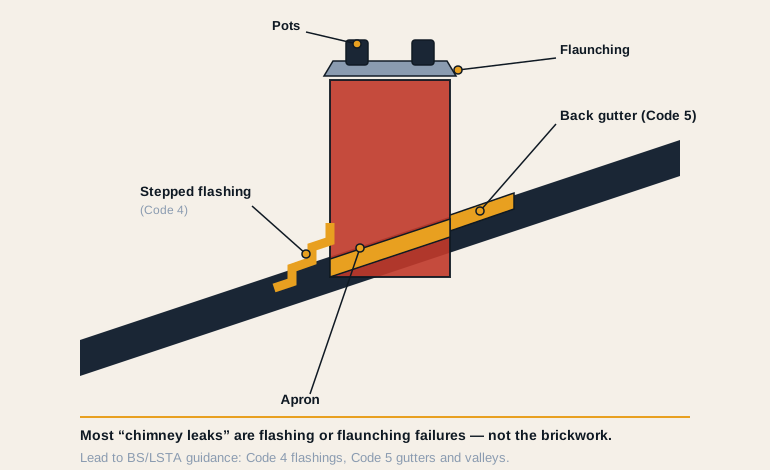
- Lead flashing lifting, split or missing where the stack meets the roof
- A leaning stack or a cracked, spalling chimney pot
- White salt staining (efflorescence) on the chimney brickwork
When it is not the answer: If the stack is sound and only the flashing has failed, a flashing repair fixes the leak — you do not need the stack rebuilt. Read the full guide.
Roofing in Eastbourne: Local Knowledge
Eastbourne's chimney stacks tell the story of its housing. The Victorian and Edwardian terraces of Meads, Upperton and Old Town carry tall, often shared stacks that take the full force of the salt-laden south-westerly wind — and are the single commonest source of a period-house leak, usually through failed lead flashing or eroded mortar rather than the brickwork itself. The seafront mansion blocks add the most exposed stacks in the town, where only Code 5 lead and proper repointing survive.
On the 1930s and post-war stock of Roselands and Hampden Park, the typical chimney call is a cracked flaunching or a loose pot after decades of weather. Across all of it, the Eastbourne rule holds: patch a coastal stack with thin lead or a cement fillet and it fails again within a season, so we repoint and re-flash properly with marine-grade materials, and in conservation areas we match the brick and mortar so the repair is invisible.
What to Expect: Chimney Repairs in Eastbourne
1. Survey
We inspect the stack, flashings, flaunching and pots and trace where water is getting in.
2. Written quote
A clear price for repointing, re-flashing, re-flaunching or rebuild — only what is needed.
3. Scaffold
Chimney work needs scaffold or a secure platform; we arrange it and itemise it.
4. The work
We repoint, renew Code 5 lead flashings, re-flaunch or rebuild to match, using coastal-grade materials.
5. Sign-off
We check for water-tightness, clear up and guarantee the work.
How Long Does It Take?
| Job | Typical duration |
|---|---|
| Re-flash (Code 5 lead) | Half to full day |
| Repoint stack | Half to full day |
| Re-flaunch & refit pot | Half day |
| Rebuild stack (from roofline) | 2–3 days |
Salt-laden south-west wind drives rain hard against seafront and western chimney stacks, so we specify Code 5 lead and full repointing rather than patch fixes that fail again quickly.
Getting Safely onto Eastbourne Roofs
Chimney work always needs scaffold or a secure working platform — we arrange the licence and itemise it in the quote. Scaffold is specified for: all chimney work — stacks cannot be worked safely from a ladder - always itemised in your written quote, never a hidden extra, and we arrange it.
Eastbourne's Victorian and Edwardian terraces in Meads, Upperton and Old Town often have no side access, so scaffold reaches the rear over the roofline or through the property; seafront mansion blocks need tall scaffold licences for parapet and stack work. Pavement scaffold and skip permits go through East Sussex County Council; allow a few working days on streets like Church Street in Old Town, the terraces off Seaside, Grange Road in Upperton where space is tight.
Chimney Repairs Prices in Eastbourne
| Job | Typical range | Notes |
|---|---|---|
| Re-flash chimney (Code 5 lead) | £300–£650 | Per stack |
| Repoint stack | £350–£700 | Height dependent |
| Re-flaunch & refit pot | £250–£500 | Per pot |
| Remove redundant stack | £500–£900 | To roofline, made good |
| Rebuild stack | £1,200–£2,500 | From roofline up |
What moves the price
- Stack height and scaffold requirement
- Marine-grade Code 5 lead as standard on the coast
- Extent — flashing only vs repoint vs full rebuild
- Conservation matching of brick and mortar in Meads and Old Town
Worked example: Re-flashing and repointing a stack on an Edwardian terrace in Upperton, including scaffold: about £780.
Staged payment on rebuilds; nothing paid before scaffold and materials are on site.
Covering BN20, BN21, BN22, BN23, BN24 and surrounding postcodes.
Your Guarantee, Explained
Chimney workmanship is guaranteed for 10 years; lead and materials carry manufacturer warranties on top.
- Covered: workmanship for 10 years, in writing, transferable if you sell.
- On top: manufacturer warranties on materials (terms vary by product).
- Not covered: storm or impact damage - that is an insurance matter, and we will document it for your claim.
If a fault appears in covered work, we come back and put it right. No quibbling, no re-charge.
What It Is Like While We Work
Chimney work needs scaffold for a few days and produces some mortar debris, all sheeted and cleared. You do not need to be home for external stack work. You do not need to stay home for external work - we just need power and access agreed in advance.
Chimney work runs year-round but we avoid high wind at the stack; if rain interrupts, the flashing is made temporarily watertight. Channel salt air ages lead and fixings faster here than inland, and the south-west prevailing wind drives rain onto exposed western and seafront elevations, so we build weather margin into every Eastbourne booking.
Why Mortar Choice Decides Everything
On pre-1930 Eastbourne stacks, the original bricks are soft and were built with lime mortar designed to flex and breathe. Repointing them in hard modern cement traps moisture against the brick, which then spalls and crumbles as it freezes and thaws. Hydraulic lime mortar is the correct material — it moves with the stack and lets it dry. Using cement to 'save time' is the single most common cause of accelerated chimney decay we see.
Flaunching, Cowls and Capping
The flaunching is the mortar bed that holds the pots and sheds water off the top of the stack; cracked flaunching lets water straight into the brickwork and is a frequent leak source. We renew it in a flexible mix. Where a flue is redundant, a capping cowl keeps rain out while allowing ventilation and prevents damp, for a fraction of the cost of removing the stack — often the sensible choice on an unused Eastbourne chimney.
Reading the Signs From the Ground
You can often spot a stack that needs attention without going up: visible mortar gaps and dark open joints, white salt staining on the brick, a leaning or loose pot, or intermittent damp on the chimney breast inside that appears only in wet weather. That internal damp is the classic tell — it is almost always failed pointing, flaunching or lead flashing rather than condensation.
Scaffold, Not Ladders
We insist on scaffold for chimney repointing. Correct mortar application, safe raking-out of old joints, and proper curing cannot be done hanging off a ladder beside a tall stack. Scaffold is included in every chimney quote we give, and on terraced Eastbourne streets or where the footway is affected we arrange any East Sussex County Council highway licence needed.
Repoint, Rebuild or Cap
Not every failing stack needs the same answer. Sound brickwork with open joints simply needs repointing. A stack with spalled, crumbling upper courses may need the top few courses rebuilt before repointing lower down. A redundant stack in poor condition can be capped or reduced rather than fully repaired. We give honest numbers for each option at survey rather than defaulting to the most expensive.