Pevensey divides into two entirely different environments. The medieval village inland holds some of the most historically significant domestic properties in East Sussex, in a conservation area where roofing material choices are tightly constrained by planning requirements. Pevensey Bay, a mile to the south on the shingle coast, has the most direct Channel exposure of any location we cover — properties here experience wind uplift forces that require roofing specifications well beyond the standard for domestic properties.
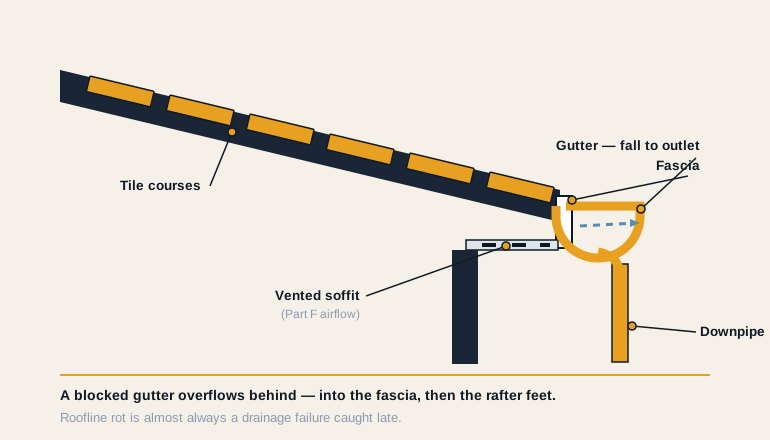
Fascias, soffits, and bargeboards on historic village cottages and 1930s Pevensey Bay chalet bungalows properties in Pevensey face accelerated deterioration from the Pevensey Bay has zero shelter from the Channel — the most direct coastal exposure in the entire coverage area. UPVC becomes brittle and joints fail prematurely; timber fascias on older properties absorb moisture and rot faster than in sheltered inland locations. When they fail, water gets behind them — saturating rafter feet, introducing damp into the roof structure, and eventually causing the structural rot we find on properties across Pevensey Bay seafront properties, the historic village centre, and the Pevensey Levels approaches every month.
We replace fascias, soffits, and bargeboards across Pevensey in UV-stabilised, salt-resistant UPVC with stainless steel fixings throughout. For Victorian and Edwardian properties in Pevensey, we specify ogee and bull-nose profiles that maintain period character. For modern estate housing, square-edge profiles are the practical and cost-effective choice.
Why Pevensey Properties Need Correct-Spec Fascia Systems
Standard UPVC is manufactured for inland exposure. In East Sussex, we specify products rated for coastal environments — higher UV stability, better salt resistance, and stainless steel fixings that won't corrode within a decade. Pevensey Bay re-roofs are specified with fully mechanical tile fixing and wind-rated flat roof perimeter details as standard. The additional cost over standard products is small; the additional service life is significant.
When to Replace vs Repair
If UPVC fascias have multiple cracks, are sagging at multiple points, or brackets have failed repeatedly, replacement is the right decision. For timber fascias showing soft spots, peeling paint, or section rot, targeted repair may work if the damage is limited — but widespread rot means full replacement. We assess honestly at survey stage.
Guttering at the Same Time
On historic village cottages and 1930s Pevensey Bay chalet bungalows properties in Pevensey, we always quote fascia and gutter replacement together. The gutters come down to access the fascias — fitting new fascias and re-hanging old guttering is a false economy on properties where the gutter system is at the same age and condition as the fascia.
Why Pevensey Specifically
Fascias and soffits on Pevensey properties are exposed to the Pevensey Bay has zero shelter from the Channel — the most direct coastal exposure in the entire coverage area. The historic village cottages and 1930s Pevensey Bay chalet bungalows stock in Pevensey Bay seafront properties, the historic village centre, and the Pevensey Levels approaches presents wind uplift tile loss in Pevensey Bay is extreme — properties here lose tiles in storms that leave inland properties untouched. Pevensey Bay re-roofs are specified with fully mechanical tile fixing and wind-rated flat roof perimeter details as standard.
For Pevensey Bay homeowners in particular, the specification of any roofing work needs to reflect the actual exposure of the property rather than standard domestic roofing practice. We survey Pevensey Bay properties with that exposure in mind and specify accordingly — mechanically fixed tiles, wind-rated flat roof perimeters, heavy code lead. It costs a little more; it lasts significantly longer.