Pevensey divides into two entirely different environments. The medieval village inland holds some of the most historically significant domestic properties in East Sussex, in a conservation area where roofing material choices are tightly constrained by planning requirements. Pevensey Bay, a mile to the south on the shingle coast, has the most direct Channel exposure of any location we cover — properties here experience wind uplift forces that require roofing specifications well beyond the standard for domestic properties.
Lead work is the most technically demanding specialisation in roofing, and in Pevensey it matters more than almost anywhere in East Sussex. The Pevensey Bay has zero shelter from the Channel — the most direct coastal exposure in the entire coverage area accelerates lead corrosion and causes premature oxide patina formation that weakens lead's flexibility over time. The step flashings on historic village cottages and 1930s Pevensey Bay chalet bungalows properties in Pevensey Bay seafront properties, the historic village centre, and the Pevensey Levels approaches, the parapet gutter linings on period terraces, and the valley linings throughout Pevensey's older housing stock are all subject to this accelerated degradation — and when lead fails, the resulting water ingress is persistent and often structural.
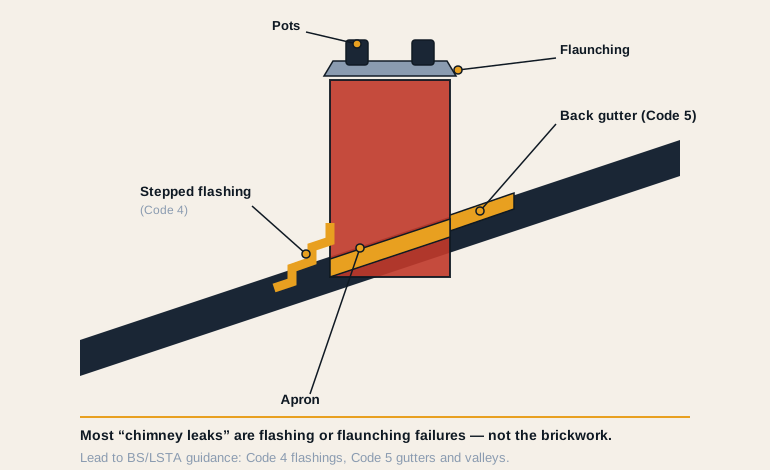
We carry out all lead work to BS EN 12588 specification using Code 4, 5 and 6 lead sheet as appropriate. All lead is dressed using traditional timber tools — mechanical formers introduce stress into the lead that causes cracking at bends. Joints are correctly lapped and sealed, not just dressed over.
Lead Work We Carry Out in Pevensey
Chimney step and cover flashing replacement on historic village cottages and 1930s Pevensey Bay chalet bungalows properties — the most common lead call we receive from Pevensey. Valley lead lining as an upgrade from failed mortar valleys. Parapet gutter re-lining on period terraces. Abutment flashings where roofs meet walls, conservatories, or extensions. Flat roof bay window and porch lead sections. Lead soakers under plain tile courses.
Why Code Weights Matter in Pevensey
The Pevensey Bay has zero shelter from the Channel — the most direct coastal exposure in the entire coverage area makes correct lead code weight selection critical. Pevensey Bay re-roofs are specified with fully mechanical tile fixing and wind-rated flat roof perimeter details as standard. Undersized lead — Code 3 used where Code 5 is required, for example — fails within 10–15 years on Pevensey properties where Code 5 correctly specified would last 40+. We never substitute a lighter code to reduce cost.
Parapet Gutters in Pevensey
Parapet gutters on historic village cottages and 1930s Pevensey Bay chalet bungalows properties in Pevensey Bay seafront properties, the historic village centre, and the Pevensey Levels approaches are a specialised item that many roofers don't carry out correctly. A parapet gutter re-lining requires correct falls to the outlet, correct upstand height at the parapet wall, and properly welted joints. We assess the outlet capacity and drainage adequacy at the same time — undersized outlets cause overflow that negates the new lining.
Why Pevensey Specifically
Lead work in Pevensey is subject to the Pevensey Bay has zero shelter from the Channel — the most direct coastal exposure in the entire coverage area. The historic village cottages and 1930s Pevensey Bay chalet bungalows properties in Pevensey Bay seafront properties, the historic village centre, and the Pevensey Levels approaches show wind uplift tile loss in Pevensey Bay is extreme — properties here lose tiles in storms that leave inland properties untouched. Pevensey Bay re-roofs are specified with fully mechanical tile fixing and wind-rated flat roof perimeter details as standard.
For Pevensey Bay homeowners in particular, the specification of any roofing work needs to reflect the actual exposure of the property rather than standard domestic roofing practice. We survey Pevensey Bay properties with that exposure in mind and specify accordingly — mechanically fixed tiles, wind-rated flat roof perimeters, heavy code lead. It costs a little more; it lasts significantly longer.