Langney and Shinewater represent the largest post-war residential development in Eastbourne, built in phases from the late 1950s through the 1970s to house a rapidly growing town. The roofing consequences of that construction era are now fully apparent: concrete interlocking tiles on galvanised fixing nails, where the nails have a nominal 40–50 year service life in moderate conditions and rather less in the coastal humidity of this low-lying area near the Pevensey Levels.
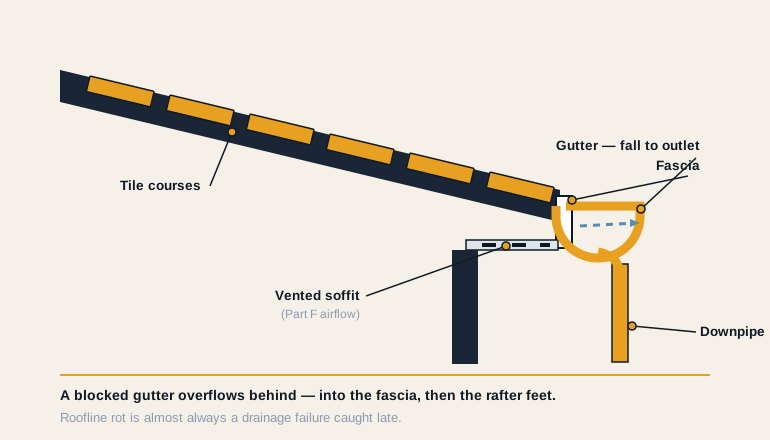
Fascias, soffits, and bargeboards on post-war and 1960s–70s estates properties in Langney face accelerated deterioration from the low-lying coastal position with persistent moisture from the Pevensey Levels direction. UPVC becomes brittle and joints fail prematurely; timber fascias on older properties absorb moisture and rot faster than in sheltered inland locations. When they fail, water gets behind them — saturating rafter feet, introducing damp into the roof structure, and eventually causing the structural rot we find on properties across Shinewater estate, Langney Point, and the Princes Road area every month.
We replace fascias, soffits, and bargeboards across Langney in UV-stabilised, salt-resistant UPVC with stainless steel fixings throughout. For Victorian and Edwardian properties in Langney, we specify ogee and bull-nose profiles that maintain period character. For modern estate housing, square-edge profiles are the practical and cost-effective choice.
Why Langney Properties Need Correct-Spec Fascia Systems
Standard UPVC is manufactured for inland exposure. In East Sussex, we specify products rated for coastal environments — higher UV stability, better salt resistance, and stainless steel fixings that won't corrode within a decade. stainless steel screw re-fixing or full re-roof are the only viable long-term solutions — temporary tile replacement simply defers the inevitable. The additional cost over standard products is small; the additional service life is significant.
When to Replace vs Repair
If UPVC fascias have multiple cracks, are sagging at multiple points, or brackets have failed repeatedly, replacement is the right decision. For timber fascias showing soft spots, peeling paint, or section rot, targeted repair may work if the damage is limited — but widespread rot means full replacement. We assess honestly at survey stage.
Guttering at the Same Time
On post-war and 1960s–70s estates properties in Langney, we always quote fascia and gutter replacement together. The gutters come down to access the fascias — fitting new fascias and re-hanging old guttering is a false economy on properties where the gutter system is at the same age and condition as the fascia.
Why Langney Specifically
Fascias and soffits on Langney properties are exposed to the low-lying coastal position with persistent moisture from the Pevensey Levels direction. The post-war and 1960s–70s estates stock in Shinewater estate, Langney Point, and the Princes Road area presents endemic nail sickness across the entire estate housing stock — systematic fixing failure rather than isolated damage. stainless steel screw re-fixing or full re-roof are the only viable long-term solutions — temporary tile replacement simply defers the inevitable.
For Langney and Shinewater homeowners, the honest message is that nail sickness cannot be resolved with individual tile replacement — it is a systematic fixing failure that requires a systematic fix. A free survey will tell you the extent of fixing failure on your specific property and whether re-fixing or a full re-roof represents better long-term value.